
In Carcase for Hounds, Meja Mwangi does not give General Haraka the forest alone. He gives him Kimamo — the fighter who stays. Kimamo is not the loudest man in the Mau Mau unit, and he is not the one the history books remember first. He is the one who is still there when the ammunition runs low, when the supporters have scattered, and when the General himself begins to wonder if the dawn will ever come. Kimamo does not perform loyalty. He simply does not leave.
For seven years, through the dry seasons and the public storms of Pawa IT, Eddie was my Kimamo.
From the Sales Floor to the Cloud
Eddie joined Pawa IT in 2019 as a Sales Consultant. If you had told me then that I was shaking hands with the man who would eventually run our entire Engineering department, I would have believed you the way you believe most generous predictions about the future — politely, and without much conviction.
Nobody rises from a junior sales role to Head of Engineering by accident. That is not a title change. That is seven years of a man deciding, quietly and repeatedly, to become more than the container he was hired into.
There is a particular kind of discipline Meja Mwangi writes into his Nairobi strivers in Going Down River Road — the hustlers and labourers of River Road who understand, without needing to be told twice, that this city does not hand anyone a shortcut. Eddie had that same discipline. Skinny, unassuming, never the man you’d pick out of a lineup as a future Head of Engineering, he simply put his head down and walked straight through the middle of the work, the way Mwangi’s characters walk through the middle of Nairobi’s grind — because that has always been the only way out.
Staying in the Forest
There was a season — anyone who has followed my story knows which one — when the ground under Pawa IT shifted, and my name was carried through public rooms I had no control over. It is the hardest professional season I have lived through, and this piece is not the place to relitigate it. What I will say is this: Eddie did not need a headline or a court transcript to know who I was on an ordinary Tuesday. He had already tested that, daily, for years, long before the noise started, and he stayed through it without ceremony. He kept mentoring the juniors, kept the client escalations moving, kept the department standing while the rest of the sky was doing something else entirely. Kimamo did not ask Haraka to prove himself in the middle of the fight. He had already seen him fight.
That is the part of loyalty nobody puts on a certificate. It is not the applause at the office party. It is the choice, made privately and repeatedly, to remain.
Ecclesiastes 9:11
I hold Ecclesiastes 9:11 close, and I want to set it down here in full, because I have never read a truer description of what I watched happen to Eddie over seven years:
“I returned, and saw under the sun, that the race is not to the swift, nor the battle to the strong, neither yet bread to the wise, nor yet riches to men of understanding, nor yet favour to men of skill; but time and chance happeneth to them all.”
Eddie was never the swift one in any obvious sense, and he will be the first to laugh if you call him strong — he is, and has always been, one of the thinnest men in any room he walks into. But Solomon was not writing about muscle, and he was not writing about who looks the part. He was writing about the ones who stay hungry long after everyone else has eaten their fill and sat down.
In a tech ecosystem where people are constantly chasing the next glossy credential to post on LinkedIn, Eddie chose to stay hungry, stay foolish — reaching for a ceiling that had no business being his to reach for, while doing the humbling work of admitting what he didn’t yet know and mastering it anyway. When time and chance finally presented themselves — when Pawa IT needed real, battle-tested engineering leadership — Eddie did not shrink. He seized his moment, because he had already spent years doing the unseen work in the dark that made him ready for the light.
What the Curtain Never Had to Prove
You do not build a company on strategy decks. You build it on the backs of dependable people, and you find out how dependable they were the moment they leave. When word went out this month that Eddie was moving on to Google, the replies that came back from the people he’d served for years said more than any performance review ever could..
There is an old maxim, most often credited to the basketball coach John Wooden, that character is what you do when no one is watching. I have always thought it undersells the point. The harder test is not the absence of an audience but the presence of trust nobody is keeping score of — a boss who has no proof you are on his side, a client with no way of checking whether you fixed the thing right or just fixed it fast. Eddie passed that test on both sides of his desk. Privately, with me, through seasons that never made it into any performance review. And professionally, in the maintenance work nobody claps for — the pipeline patched at 11pm, the licence renewal nobody thanked him for — that never once made it into a client-facing deck either.
Heri pazia kuliko bendera
There is a Swahili proverb, heri pazia kuliko bendera — better a curtain than a flag — carried on the lesos and kangas of the Kenyan Coast, that speaks to steadiness, consistency, and single-minded purpose. A flag needs an audience and a wind to prove what it is. A curtain simply holds its shape, watched or unwatched. Eddie was never interested in being the flag.
One operations lead at a pan-African strategy and design firm we’ve supported since our earliest cloud rollouts put it simply: what started as a technology project turned into a genuine partnership — the kind, he said, that “never felt like a vendor-client relationship; it felt like we were solving problems together.” A fintech CEO wrote back a single line — “we will miss you” — that carried more weight than a page of testimonials. An engineering lead at a bank we work with told him plainly that his leadership had been invaluable to work they now depend on daily. Another client joked, in his goodbye note, about a drink the two of them had kept promising each other and never quite found the time for. Eddie promised they’d have it “on the other side” — and I intend to hold him to that on my own account too.
I am keeping those voices close to their owners rather than printing them here in full. But I wanted Eddie to know, in writing, that this is not sentiment I am manufacturing on his behalf. The people who paid our invoices for years said it themselves, unprompted, in the same week he announced he was leaving.
The Fire Was Always His
When I look back through seven years, so much of our history was written in the blood, sweat, and tears of the grind: the countless coffee mugs gone cold on our desks, the late nights, the angry emails, the arguments loud enough to close a door over. And then, in the same breath, the good part — delighted customers, proud deployments, migrations that worked exactly the way we promised they would, the banter and the memes and one too many beers after a release finally shipped.
And there were the moments we took to the streets instead of the office — the 2024 Gen Z protests, both of us in the crowd in downtown Nairobi, teargassed like everyone else around us, still standing, still shouting, because some things you fight for whether or not they ever show up on an invoice. That is what building something in this country actually looks like, in full, and Eddie was there for every part of it.
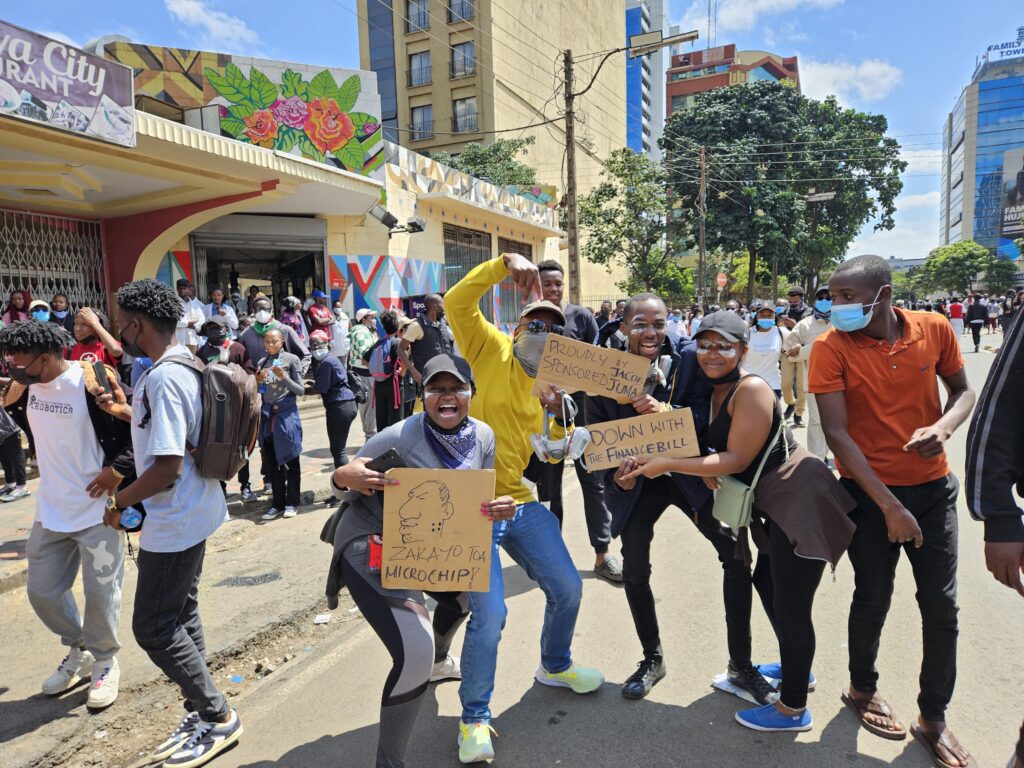
There is a specific kind of pride reserved for watching someone you once showed the ropes to become the one holding them for everyone else. I felt the whole weight of it this month.
I like to think I mentored Eddie, and in the early years, perhaps I did. But watching him step into Google, I know the fire in him was never mine to give. I gave him room to reach. He did the grinding, the learning, and the staying — in the late nights, in the client fires nobody saw, in the decision to stand his ground when leaving would have cost him nothing.
The Mau Mau fighters in that forest did not win because they were invincible. They won because they refused to crawl when everyone expected them to.
Eddie — thank you for seven years. Thank you for staying when it would have been easier not to. Google is getting an exceptional engineer. I already know they are also getting a man who knows how to hold the line.
Oscar Limoke is the co-founder of Pawa IT Solutions and Konversations. He writes about technology, leadership, and what it actually costs to build something in Africa.